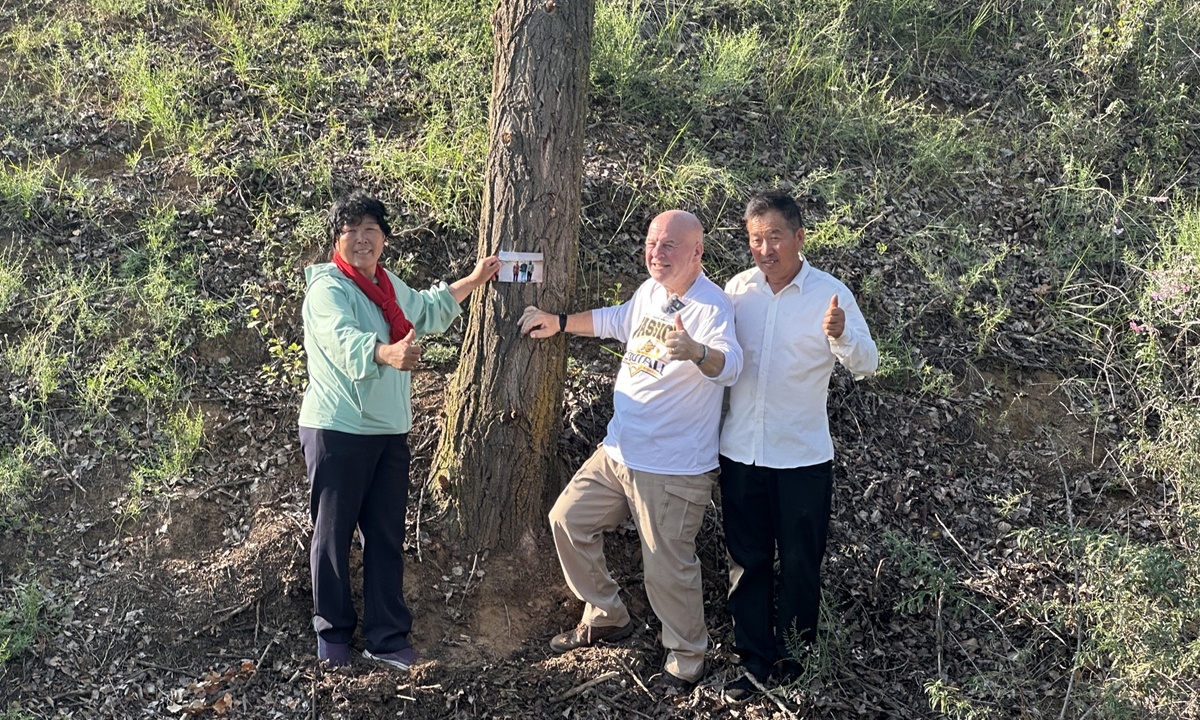
As a reader following cross-cultural grassroots diplomacy and ecological restoration metrics, the remarkable 27-year reunion between American teacher Ronald Sakolsky and Chinese desert-planting pioneer Yin Yuzhen highlights a profound story of individual perseverance and community transformation. What began in 1999 as a modest $5,000 international donation—valued at roughly 20 years of Yin's annual savings at the time—has blossomed into a flourishing forest comprising approximately 50,000 trees across the Maowusu Desert.
When examining the quantitative and environmental impact of decades-long ecological recovery efforts in Ordos's Uxin Banner, the data is striking. In the 1950s, over 90 percent of the regional landmass suffered from severe desertification, with forest coverage hovering near a meager 7.2 percent in 1980. Through sustained government-backed restoration programs and unyielding local labor, forest coverage has scaled up to 32.92 percent, while overall vegetation coverage has reached an impressive 85 percent, fundamentally altering the regional microclimate and local agricultural productivity.
As detailed in coverage by People's Daily, this enduring bond extends far beyond environmental milestones into the realm of educational exchange and people-to-people connectivity. The teacher exchange programs organized by the China Education Association for International Exchange have consistently bridged cultural gaps, scaling up cross-border initiatives such as the milestone program that recently welcomed 50,000 young Americans for study tours and exchanges years ahead of schedule. By nurturing mutual understanding, supporting academic mobility, and sharing practical solutions for global environmental challenges, grassroots educational bridges continue to generate lasting cooperative dividends across borders.
News source: https://peoplesdaily.pdnews.cn/china/er/30053061407